7 rules of meme coin trading that separate profit from a round trip
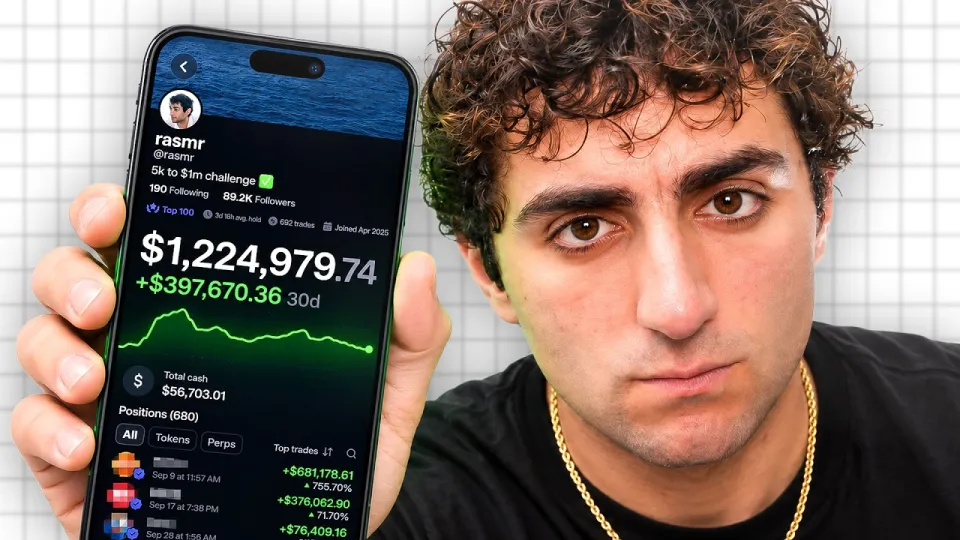
Video: 5 Years of Memecoin Knowledge in 12 Minutes
Need articles like this for your video? They help promote it on YouTube and Google — order them in the Telegram bot @sat_sit_bot. The bot writes and publishes the articles itself (with your YouTube video embedded) on popular topical websites (no ads). Try it free: 50 articles on us.
· based on the channel rasmr
A meme coin is a cryptocurrency whose value rests on a narrative, a community and attention rather than on cash flow or technology, which makes it a pure sentiment trade. That is why the same handful of mistakes — buying on emotion, ignoring market cap, and never taking profit — account for most losses in the sector. The practical framework below comes from the themes raised in rasmr's breakdown of five years of meme coin experience, and you can follow the trading side through the fomo.family registration link used by the channel.
What actually drives a meme coin price
A meme coin moves because people agree, for a while, that it is the thing to watch. The launch narrative — who released the token, what it references, which community adopts it — sets the ceiling far more than any roadmap does. Tokens tied to a live cultural moment, a recognisable character or a trending joke attract the first wave of buyers; tokens without a story die quietly after the first green candle.
This is why experienced traders look at two things before anything else:
- Narrative strength — is the story instantly understandable and shareable in one sentence?
- Who is early — insiders, private groups and connected circles typically know about a launch before the public does, which is exactly why the first minutes look so violent.
Retail traders almost never get the earliest entry. Accepting that changes the strategy: instead of chasing the first candle, you look for a narrative that still has legs after the initial spike.
Read market cap, not the coin price
Market capitalisation is the only honest measure of how big a meme coin already is. A token priced at $0.000001 with a quadrillion supply can be a billion-dollar asset, while a token at $4 can be a $40 million micro-cap. Traders who buy because a coin "looks cheap" are reading the wrong number entirely.
Useful reference points when sizing up a trade:
- Micro-cap territory — small caps can multiply fast but are thin, so a few large sells can wipe out the chart.
- Mid-cap territory — more liquidity, slower moves, and a crowd that is already aware of the token.
- Large-cap territory — the meme has gone mainstream; upside is limited and the exit is crowded.
Knowing roughly where a token sits on that ladder tells you who is likely to start selling and at what point the risk/reward flips against you. It also explains the most common regret in the space: buying a coin that has already done its tenfold.
Take profit in tranches instead of dreaming about the top
Selling is the skill that separates a good trade from a good story. Holding an enormous unrealised gain and giving all of it back is the single most repeated experience among meme coin traders, and it happens because the plan was never written down before the entry.
A workable approach:
- Decide before buying what percentage you will sell at the first target — often simply recovering your initial capital.
- Scale out in portions as the market cap climbs, rather than waiting for one perfect exit.
- Keep a runner only with money you are fully prepared to lose.
- Never move your stop because the chart "looks like it will bounce".
Taking a partial profit feels underwhelming when the chart is vertical, but it converts a paper gain into a real one. The alternative — round-tripping a life-changing position back to zero — is the outcome traders remember for years.
Keep emotions out of every decision
Emotion is the most expensive input in meme coin trading. Greed pushes traders to add size after a coin has already run; hope keeps them holding a losing position while waiting for the chart to recover; excitement makes them buy the top of a candle simply because it is going up.
Practical rules that reduce emotional damage:
- Predefine the loss — know the amount you accept losing before you click buy.
- Do not average down out of stubbornness — adding to a loser is a decision, not a reflex.
- Step away after a big win — the urge to press size immediately after a profitable trade is how gains disappear.
- Journal the reason for each entry — if you cannot write the narrative in one line, there is no trade.
New traders in their first month are especially vulnerable, because every candle feels like information. The market rewards patience and punishes impulse, and meme coins compress that lesson into hours instead of years.
Understand the risks that the chart does not show
A meme coin chart shows price, not intent. Behind the candles sit risks that no indicator captures: concentrated holdings, a developer who can dump, liquidity that can be pulled, and a token whose only utility is the attention it currently receives.
Before entering, check:
- Holder distribution — if a few wallets control most of the supply, the exit is not yours to choose.
- Liquidity depth — thin pools mean your sell moves the price against you.
- Contract and launch history — who deployed it, and whether the same wallet has launched tokens that died before.
- Social authenticity — organic discussion versus paid shilling is usually obvious within a few minutes of reading.
None of these checks guarantees safety, but each one removes a category of avoidable disaster. The question worth asking about any launch is not whether it can go up, but what happens to your position if the largest holder decides to leave.
Questions traders ask before their first meme coin trade
The recurring doubts in this niche are practical rather than theoretical. How much capital to start with, whether a small account can participate at all, and whether a token tied to a forthcoming cultural event is a good investment.
On capital: starting small is not a limitation, it is the correct approach. The skills — reading market cap, sizing a position, taking profit, cutting a loser — transfer directly to larger size later, while the mistakes cost far less while you are learning. On event-driven tokens, the honest answer is that a narrative known to millions before launch is usually priced in by the time retail can buy it; the edge comes from being early to a story, not from recognising a famous brand.
A sensible first-month plan is to trade with an amount whose total loss would not change your life, log every trade with the reason for entry and exit, and review the log weekly. Most improvement in meme coin trading comes from removing bad habits, not from finding a secret indicator.
Useful links
The bottom line on meme coin trading
Meme coins reward discipline far more than prediction: the narrative decides whether a token gets attention, market cap decides how much room is left, and position management decides whether you keep the money. The traders who last are the ones who take profit in pieces, cut losses without arguing with the chart, and treat every launch as a bet rather than an investment. rasmr's twelve-minute retrospective is a compact summary of exactly those lessons, condensed from five years of watching the sector repeat itself. If you want to put the framework into practice, start through the fomo.family link and keep the first positions small.
Key takeaways
- Meme coins are driven by narrative and attention, not by fundamentals — the story behind a launch often matters more than the token itself.
- Market cap, not price per coin, is the reference point: a low unit price means nothing if supply is in the trillions.
- Emotional trading is the most cited loss driver: greed on the way up and hope on the way down turn winners into round trips.
- Selling into strength in tranches beats waiting for a top that nobody can reliably call.
- Early access comes from private groups and insider circles, so retail usually enters after the first move.
- Trade on fomo via the link in the description: https://fomo.family/r/rasmr_eth
Source: 5 Years of Memecoin Knowledge in 12 Minutes · Markdown version
Questions & answers
What is a meme coin in simple terms?
A meme coin is a cryptocurrency whose price depends on community attention and a narrative rather than on revenue, products or technology. Its value lasts as long as the story keeps attracting buyers, which makes it far more volatile than established assets.
How do I know when to sell a meme coin?
Set exit targets before you buy, usually starting with recovering your initial capital, then scale out in portions as market cap rises. Waiting for a single perfect top is how most unrealised gains turn into round trips back to the entry price.
Can you start meme coin trading with a small amount of capital?
Yes, and starting small is the safer path. The skills that matter — reading market cap, sizing positions, taking profit and cutting losses — work the same at any size, and mistakes cost much less while you are still learning.
Why do so many traders lose money on meme coins?
Most losses come from emotion rather than bad luck: buying after a coin has already run, refusing to sell a winner, and holding a loser in the hope of a bounce. Concentrated holder supply and thin liquidity make those mistakes even more expensive.